Pocatello Education Association member Pauline Smith was going through her school’s yearbook when she realized something was missing: special education students. The students had registration photos, but they were seemingly invisible elsewhere.
Smith got to work. As a member of the Idaho Education Association’s Cohort One for the Leaders for Just Schools program, and the yearbook adviser, Smith had the big-picture understanding and tools to remedy the situation.
“I don’t believe that this was malicious,” she said. “I truly think that it was just an afterthought. And those are the types of problems that we look for as we’re developing a problem of equity in the Leaders for Just Schools program.”
Leaders for Just Schools is a National Education Association program that gives participants the historical, legal and educational tools to work toward equitable outcomes for students. The curriculum grounds itself in real-life experiences so educators can better understand equity, examine how bias shapes teaching and learning, and find practical ways to improve their school’s culture so every student can succeed.
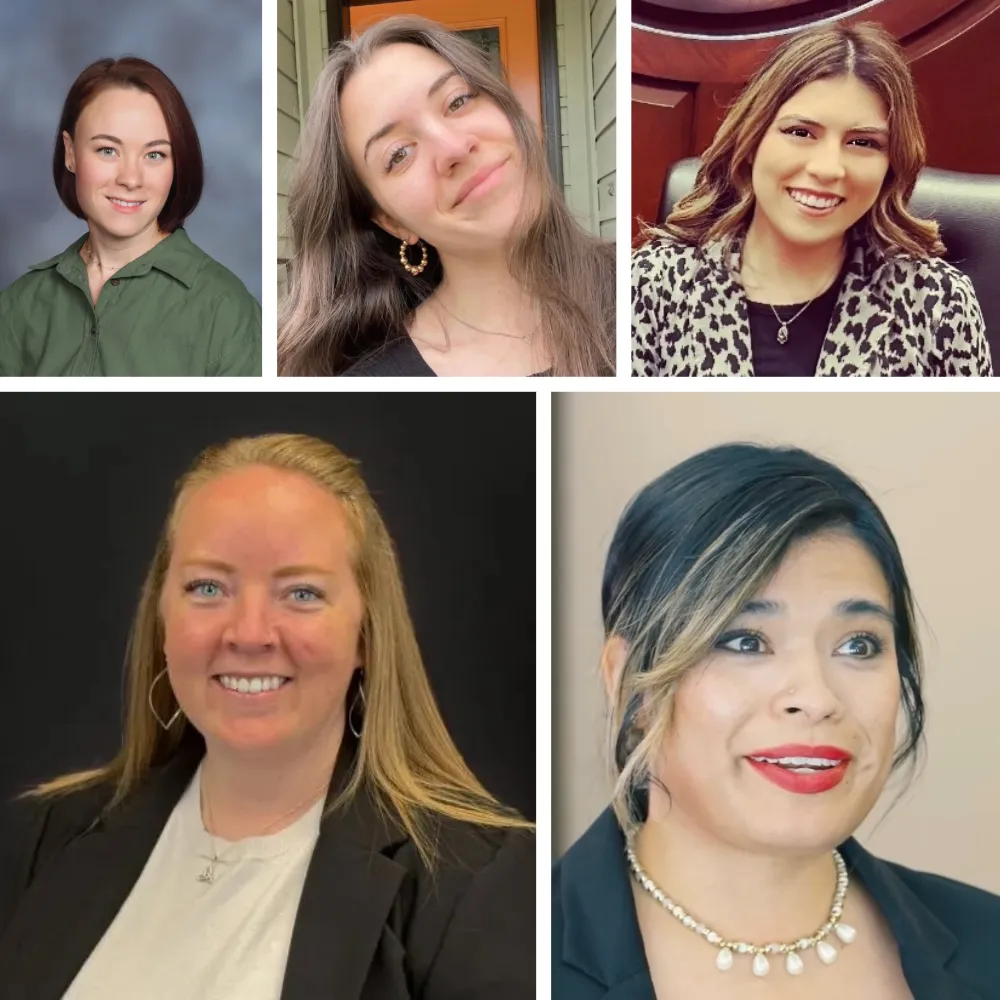
In total, 13 IEA members were part of Cohort One. The members featured below said the program has made their teaching and personal lives richer through deep reflection, difficult conversations and real-world advocacy.
Three Years to a New Outlook
The LJS program takes three years to complete, and personal work comes first. Cohort members examine their own outlooks and beliefs — including some they had never been aware of. By the time the three years were finished, the cohort had individually identified and tackled problems of equity: In other words, where were their schools not giving students equal access to the resources they needed to succeed?
For Zoraida Juarez, a Boise Education Association member and dual-language educator, the first year of personal work offered clarity. “I just always thought I didn’t have any,” she said. “I’m a personal of color. How can I be biased? So it was eye-opening, and it was a moment of a lot of learning and re-learning.”
That learning curve was a bit intimidating to Lauren Caldwell of the Boise Education Association, who knew that the program included discovering how to have difficult conversations about inequity.
“I had a lot of insecurity that I would go about it the wrong way, or I wouldn’t utilize my skills, or how to go into difficult conversations with people that were important,” she said. “I tend to be a conflict-avoidant person. Sometimes you are in difficult conversations with people who aren’t going to understand what you’re saying or why it’s important.”
But for Crystal Villanueva of the Vallivue Education Association, LJS felt like validation after experiencing years of prejudice and bias — and gave her extra motivation to stand up for others.
“As a minority educator, that was something I had experienced growing up,” she said. “So, to me, that really spoke to standing up for others that had shared experiences and advocating for students so that they could have better outcomes.”
The Projects: Turning Learning Into Action
Cohort One tackled problems of equity in their own schools or districts. We talked to five completers about how their work will make the learning environment better for their students and fellow educators.
Zoraida Juarez: The Seal of Biliteracy
Juarez originally thought she’d focus on securing stipends for dual-language educators — a perennial retention issue in schools across Idaho — but her project changed when she heard about the Seal of Biliteracy at a conference.
The seal is recognized in all 50 states and is given to students who demonstrate proficiency in English and at least one other language. But when Juarez began looking for dual-language students who had earned the seal in Boise, she came up almost empty.
When she sat down with students to discover why they weren’t trying to obtain the seal, she discovered that information about the program was murky. One student had earned the seal but didn’t realize it. Others talked about conflicting information from their schools.
Juarez got to work. She collaborated with the State Department of Education, the Boise School District and her own school to build awareness — forming a committee, ensuring the information was on the district website, and arming counselors with information. Now, she’s waiting for results.
“I don’t anticipate a huge increase this year,” she said. “But I definitely foresee it in two or three years.”
Pauline Smith: Everyone Belongs in the Yearbook
When Smith discovered that SPED students were underrepresented in the yearbook, she got to work. Smith approached the special education department head and made connections with SPED parents — and they were enthusiastic about being included. So were Smith’s yearbook students, who decided to create a spread in the yearbook.
Student photographers took pictures. A student with Down syndrome decided to talk about why it made her the funniest person. Students in wheelchairs were photographed playing basketball.
And the feedback was fantastic. Yearbook sales increased, too.
“It opened my students’ eyes to what maybe wasn’t so obvious, looking around and making sure,” she said. “They started actively seeking out coverage opportunities … it very quickly became not just my project.”
Crystal Villanueva: Building Systems for Multilingual Learners
Villanueva noticed something about the multilingual students in her school: They were being over-identified for special education services. She suspected that had more to do with learning another language than actual need.
“There is a lot of misunderstanding or misconceptions around language development and special education,” she said. “Some students can present as potentially having a disability when, really, they’re working through the appropriate levels or steps for language acquisition.”
Her solution was a system: a multi-lingual response to intervention (RTI) process developed by a committee of teachers, school psychologists and administrators built around better data collection, clearer intervention tracking and collaborative decision-making.
Villanueva is proud she pursued this new process as a facilitator. “At the end of the day, as a facilitator of change, it’s not our place to be calling the shots. It’s our place to be helping have those conversations and helping facilitate change. A leader isn’t always the person telling someone what to do. It’s the person that helps facilitate the work so that others can stand up.”
The framework she developed will be fully implemented next year, and Villanueva will facilitate the meetings.
Lauren Caldwell: Equity in Action
As her school’s belonging lead and a student of educational leadership, Caldwell tackled multiple gaps at once: how interventions were being handled, whether staff felt supported and whether her own music curriculum was leaving students out.
On the staff side, she took practical steps, building morale through activities and creating community. Staff satisfaction in her building jumped from roughly 60% to 80%.
For students, she ran a safe-and-trusted-adult survey that showed real progress over the year. The number of students who said they didn’t have a safe-and-trusted adult at school dropped precipitously by the year’s end.
And in her own classroom, she began questioning what was missing from her music curriculum. Which cultures, music and stories were being left out? She developed materials tied to different months and cultural observances, and watched her students blossom when they recognized themselves in the content.
She often thinks about a boy who didn’t seem to love music class. During Hispanic Heritage Month, she shared music tied to his culture.
“The second he recognized it — this is a kid who usually doesn’t raise his hand or participate out of the ordinary — and he raised his hand up and was super excited to share how he knew it and what it meant to his family,” she said.
Watching him light up lit Caldwell up. “That’s how every kid should feel, not just in my classroom, but in any kind of classroom, in any learning space.”
Cassie McBean: Be Bold
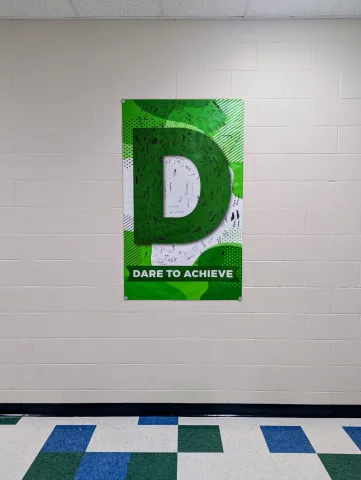
Boise Education Association member McBean’s project is a multi-year lift. She helped create an anti-bullying event built around her school’s core values — Be Bold, Be Kind — that was held at the start of the school year.
There were guest speakers, a school-wide cheer led by cheerleaders, team-building games, and banner signings during which students committed to one of the Bold values.
McBean is tweaking the event to be even more successful in the years ahead, but it has already caught the attention of her principal. Thanks to McBean’s efforts, the principal is now looking to expand positive behavioral interventions and supports (PBIS) schoolwide.
More personally, McBean is dedicating herself to more LJS work — she is enrolled in the National Education Association’s version of the program and is one of the completers who will help facilitate the next cohort in Idaho.
What’s Next, And How You Can Get Involved
Several members of Cohort One will facilitate the next Idaho cohort, which is set to begin at the end of July at Summer Institute in Lewiston.
Juarez, who went into the program unsure of the three-year commitment, is now a vocal advocate.
“I met one of my two best friends in those journeys,” she said. “It’s just nice, and it’s perfect timing, because there’s so much to be done and it just feels lonely sometimes. I think we just have to do more things where we’re in community and remembering that we’re not alone. I’m so grateful for programs like these that allow people the time and space and resources to feel supported and feel seen and connect.”
It’s a must for anyone curious about how they can be a leader, Villanueva said. “Because this work is so full of passion, and because we’re all driven by our own experiences, the time flies by quickly. And before you know it, you almost mourn the end of this first chapter of work, because you have really flown through so much and developed so much as a leader in that short time.”
Interested in Taking the Next Step?
Learn more about the next Leaders for Just Schools cohort by emailing Caitlin Pankau at [email protected] by July 6.