
This spring, Jeffrey Watkins knocked on more than 3,200 doors and spoke with nearly 900 people. He was accustomed to getting out the vote for school bonds, ACLU of Idaho and the Sierra Club, but this was a little different: Watkins was on the ballot himself.
“I told myself that I would run where there was an opportunity,” the West Ada Education Association member said of his run for House District 16 in Boise. “And there was an opportunity, so I ran.”
At the same time, Soñia Galaviz, a veteran House legislator, Boise Education Association member, and fierce advocate for the Idaho Education Association’s May Matters campaign, was hoping voters would back her bid for District 16’s Senate seat.
And in North Idaho’s Kootenai County, lifelong Republican and Lakeland Education Association member Rebecca Hasz was frustrated with her choices for Republican leadership. So she filed to run for her local precinct committee chair.
Watkins, Galaviz and Hasz were just three of the IEA members who ran for office in races large and small — not just for legislative seats, but for the party infrastructure most voters never see but that determines who gets to run in the first place. Whether Republican, Democratic, or independent, IEA candidates shared a conviction: in this political moment, staying on the sidelines is no longer an option.
The Stakes
The May 19 Idaho primary — the focus of IEA’s 14-month May Matters campaign — was an incredibly consequential election.
“Nearly 85% of our legislative seats are determined in May with an electoral turnout of less than 30%, on average,” Galaviz said. “It’s high stakes.”

Since the Republican Party closed its primary more than a decade ago, those stakes are even higher. The 2024 electoral cycle made those consequences concrete. The “Gang of Eight,” a group of hardline anti-public education lawmakers, emerged. The Idaho Legislature passed a $50 million voucher program in 2025, and then passed House Bill 516 — which targets only the Idaho Education Association — in 2026.
“It became the most apparent that we had to do something different after the losses we sustained in 2024,” Galaviz said.
May Matters was something different, and Galaviz trained members across the state to boost awareness, turnout and civic engagement.
The results weren’t perfect across the board. Five of the Gang of Eight won’t be returning for the next session, but North Idaho lost public education champion Sen. Jim Woodward (R-Sagle), among others. But educators showed up in ways they hadn’t before, “from boots on the ground, to phone calls and texting campaigns, postcard writing, at the doors, and beyond,” Galaviz said.
A small number took it further and got on the ballot themselves.
What It Felt Like to Run
Watkins didn’t win his primary race. But he said the experience of running was one of the best of his life, allowing him to connect more deeply with his neighbors and community.
“Every person who opened their door let me have a window into their life,” he said. “And why they loved Idaho, what they were struggling with, what they wish they saw.”

What he heard surprised him. “People are so hungry to be heard right now,” he said.
About 70 percent of the people he spoke with really wanted to share. “Time and time again, we heard people say: ‘Nobody has ever come to our door and nobody has ever asked what we need.”
One voter in particular stayed with him. He knocked looking for a woman. Her husband answered and revealed his wife had passed away a few months before. The man and Watkins wound up talking about grief, loss and life.
He spoke with a couple who described the harassment they faced as an interracial couple in Idaho, with parents whose children have special needs and were losing services, and with voters who had simply never had anyone ask about them.
“It really was one of the greatest privileges I’ve had,” he said.
Hasz’s race was quieter by design. Precinct committee person is not a role most voters think about, even though it is one of the most consequential in politics. But she found support she hadn’t anticipated in Kootenai County, whose name has become synonymous with Republican infighting. Although she is a Republican, the politically charged atmosphere of her county and school board made running a risk. But she won.
“I have been supported by all of my colleagues and even called brave,” she said. “I don’t consider myself brave, because I just feel like I am doing the right thing with the support of people who want to bring back common-sense conservatism to the community.”
The Teacher in the Room
All three will tell you that being an educator prepared them for this work.
“There is no better preparation for the political work in the Statehouse than that of public education,” Galaviz said. “We know the stakes, we know how to find common ground, we navigate difficult conversations and relationships all the time, we know how to balance and manage 30 things at once.”
Hasz’s identity as an educator and union member added layers to her candidacy. “Being a union member doesn’t automatically mean agreeing with every position taken by union leadership or with one political party,” she said. “Many teachers join unions because unions negotiate practical issues: pay scales, classroom conditions, due process protections, healthcare, workload, and retirement security. Supporting that doesn’t require adopting an entire ideological package.”
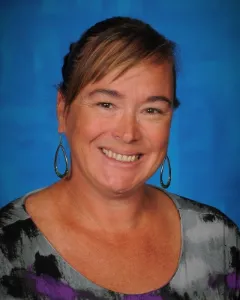
She joined the union in 2000, her first year teaching. “I truly do not believe I would still be teaching had it not been for a Sparks retreat I attended early on in my career,” she said. “Teaching is truly like no other career and I couldn’t imagine doing anything else.”
Public education doesn’t belong to any one party. “Now more than ever with public education under attack, I feel the association’s role is even more important,” she said.
A Longterm Problem
That attack — or, at best, negligence — has been sustained for years. More than 20 years ago, the Idaho State Supreme Court ruled that Idaho was not fully funding its public schools. The lawsuit that preceded the ruling had been building for years. And yet Idaho is still close to the bottom in per-pupil funding, pushing the state’s funding responsibility onto local taxpayers in the form of bonds and levies.
The union’s May Matters campaign put those issues into stark relief, and some lawmakers clearly saw their moment to take action with HB 516. “That was them saying, ‘Hey, we’ve got to shut down this campaign, so we’re going to be aggressive and attack back,’” Watkins said.
Hasz arrives at some of the same structural issues from a different perspective. Lakeland has struggled mightily to pass levies, but Hasz said levy and bond fatigue isn’t reflective of the community’s frustration with schools. It’s evidence of a broken funding model.
“Realizing the levies are not a product of mismanagement of funds but rather a state mandate for how schools are funded has become a very divisive topic,” she said. She wants to champion a change in how education is funded at the state level.
Galaviz sees an opportunity to continue building coalitions, even against what can feel like strong odds.
“I’m always hopeful,” she said. “Hope is a tactical necessity for those of us who do the work that sometimes feels like a page out of the life of Sisyphus.”
What’s Next?
The primary may be over, but there’s still plenty of work to be done. Galaviz is already looking at three swing districts — 15, 26 and 29 — as well as other opportunities across the state. “Even if you don’t live in these districts, there’s work to do remotely,” she said. “Once again, the work, big or small, all adds up to benefit public schools.”
Watkins is already back at work in the community and plans to run again. Hasz has a seat in the most powerful party in one of the most contested counties in the state. She ran because she was tired of the lack of choices in her district, and now she plans to follow through.
“Every person has to do what is right for them,” she said. “But in the end, I find that many in the education profession are problem solvers, and when we see something that is not right we need to speak out.”
That doesn’t mean there wasn’t trepidation involved, including fear of attacks. “Perceptions of teachers have definitely changed over my career, and I do think people are afraid of putting themselves out there,” she said. “But in the end, I couldn’t allow that fear from preventing me from doing what I thought was right.”
Could these three members, along with the others who took a risk and put themselves on the ballot in May, be the start of something big? All three hope that other members take a chance on running.
“I will always encourage educators to run for office,” Galaviz said. “There is no better preparation for the political work in the Statehouse than that of public education. We know the stakes, we know how to find common ground, we navigate difficult conversations and relationships all the time, we know how balance and manage 30 things at once.
“Plus, and most importantly, an educator’s experience, perspective and advocacy are the most needed components in Idaho education policy today.”