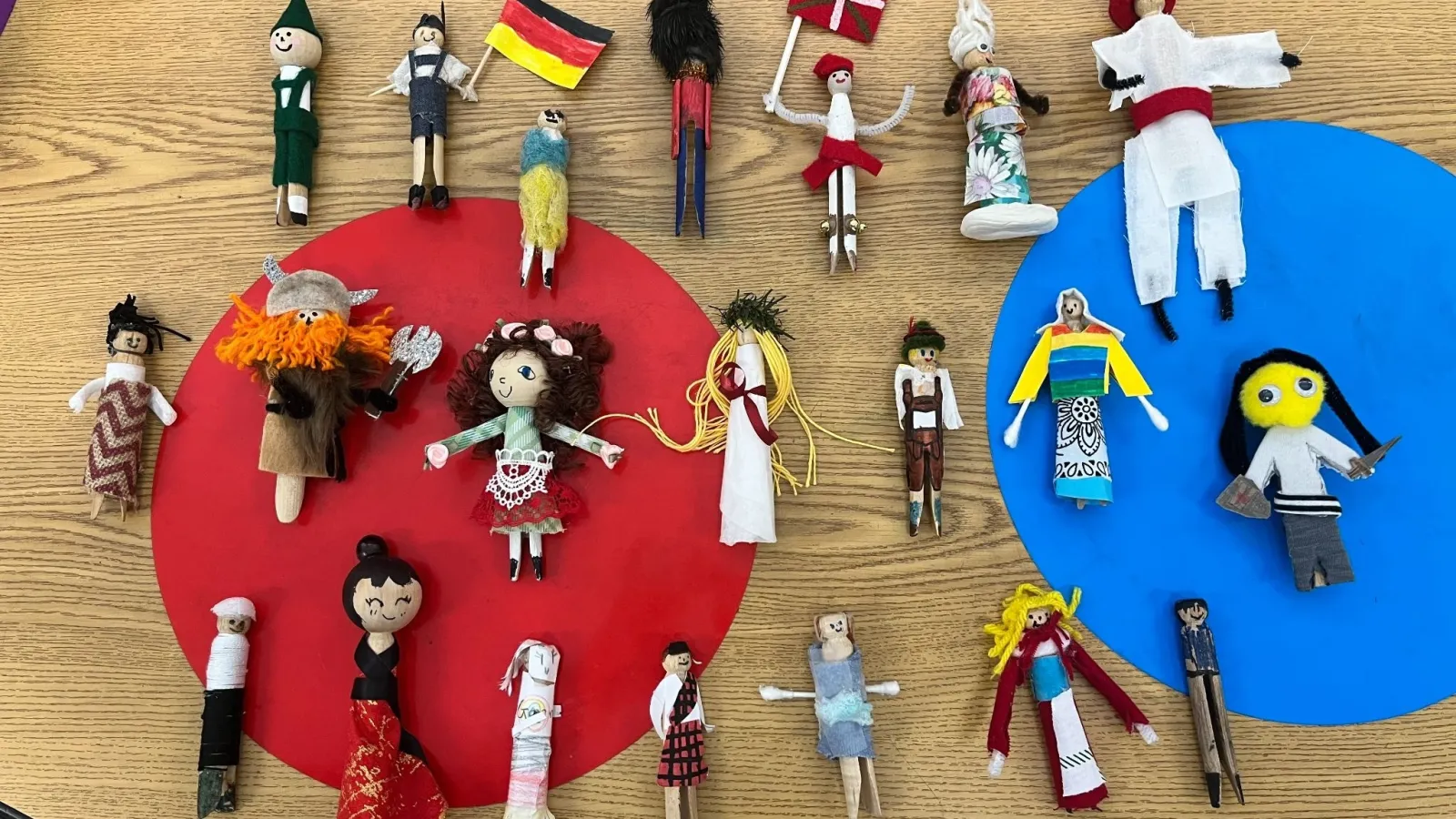
Above: Boise Education Association member Angela Deleon Guerrero invites her students to create clothespin dolls that reflect their heritage — and in the process, develop their humanity.
Angela Deleon Guerrero’s first students were always rapt with attention. Compared to her students now, they were pretty quiet.
But then again, stuffed animals usually are.
Even when she was too small to articulate why she was play-acting a classroom, she had the drive to help others learn. “I feel like I’ve always been a natural teacher,” she said. “I feel like it’s just always been in me to want to do that and make a difference in that way.”
The Boise Education Association member, who is known as Mrs. DG to her students, teaches third grade at Liberty Elementary School in Boise. An award-winning educator — she received the 2025 Outstanding Humanities Educator Award for grades K-5 from the Idaho Humanities Council — she connects with her students at a very human level.
That connection was forged in her own experience. Deleon Guerrero was a shy child who had a hard time coming out of her shell.
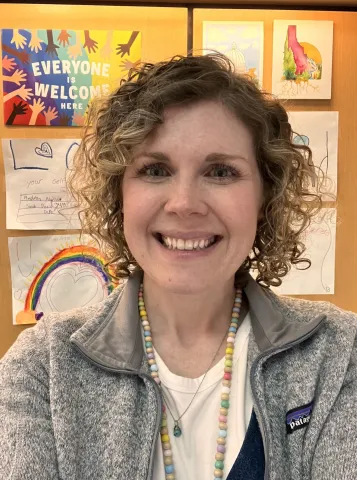
“I just felt maybe not fully seen for who I was,” she remembered. “And so I just feel like it’s kind of become my mission to find the kids who aren’t loud and who don’t talk all the time, the ones who are more reserved. Just to help everyone feel like they’re valued and part of a community.”
That deep, inward-turning experience is part of what makes her ability to teach the humanities so relevant. “I really feel like education shapes who we are and how we see ourselves,” she said. “And I just want to be part of that for somebody.”
A Classroom Built Around Perspective
Third graders are concerned with many things, but humanities typically isn’t one of them. To get them involved, Deleon Guerrero takes a practical approach and builds her classroom around perspective.
She brings in guest speakers and assigns books from different points of view. And, crucially, she talks about empathy as a daily practice: Putting yourself in someone else’s shoes, recognizing that everyone has good days and hard days and middling days. She works heritage and culture into the curriculum, which is part of the state’s standards for that grade level, but she takes it further.
One of her favorite projects took shape during her earliest days as a teacher. Her mentors, Suzanne Salinas and Liz Parsons, introduced clothespin dolls into her education practice, and she has been using them to connect with students since.
Students are instructed to interview their parents about their family’s ancestry. It’s a conversation that requires inquiry and listening skills. “They’re like, ‘Well, my grandma lives in Wisconsin,” she said of her students. “I tell them, ‘You might have to go back even farther.”
Once students have identified their ancestral lands, they — along with their parents — research it and create a small doll made out of clothespins to represent that place. They write about what they know of their heritage, or about the country itself if family memory is thin. The students then tell their classmates about their backgrounds.
“It’s really fun to see,” she said. “They’ll say, ‘Oh, our ancestors are from the same place,’ but also, ‘We chose to create our doll the same way — our ancestors are from completely different places, but we thought about making a similar dress this way.”
The entire process drives home something Deleon Guerrero believes is key to exploring our shared humanity.
“It’s about elevating all of the things that connect us, but also celebrating everything that makes us different,” she said. “And it’s kind of a fine line to walk.”
She’s frank about what she hopes policymakers and parents understand about what humanities educators are actually doing. “It’s not about promoting something over someone else,” she said. “Everyone needs to feel seen and valued and capable, so that they feel confident with their differences, but also feel that drive to find what connects everybody. And in that, we’re building empathy. We’re building a better community. We’re building kinder citizens.”
Writing a Better Future
For Deleon Guerrero, honing her writing skills has been key to furthering her own humanity and empathy. She completed a fellowship with the Boise State Writing Project, initially studying writing through the lens of science instruction. “Sometimes, it was so much work,” she remembered. “But I wish I could go back and experience it again for the first time.”
The fellowship expanded her sense of what writing could be: not just essays, but quick reflections; not just poems, but songs. “Writing is so tied to who we are,” she said.
She also imported the experience of the writing project into her own classroom. The project’s model of building and sharing community inspired her to help students not just learn, but to speak up — an experience that helps build camaraderie and trust. “Kids can learn a lot from each other,” she said. “Sometimes, they can explain it in a better way than I can.”
It’s one of the many experiences she has incorporated into her classroom after 15 years of teaching. But no matter where they were sourced — from mentor educators, from fellowships, from students themselves — those experiences are all in service of the same goal.
“I want every student to feel like they were seen and loved by me,” she said. “I can put myself into those kids’ shoes, especially the shy ones. So it’s definitely my goal every year to make sure I make some kind of connection with every student, so that they know that I support them and I love them and I value them and their time in my classroom.”
Over the years, there’s been evidence that her intentions have landed. At the end of the school year, she always shares the same message: “No matter what you’re doing or how old you are, Mrs. DG always wants to hear from you.”
Many of her students take that message to heart. She has received graduation invites, visits from former students, and emails out of the blue.
“I just hope I’ve been a little piece of their life and added a little something for them,” she said.