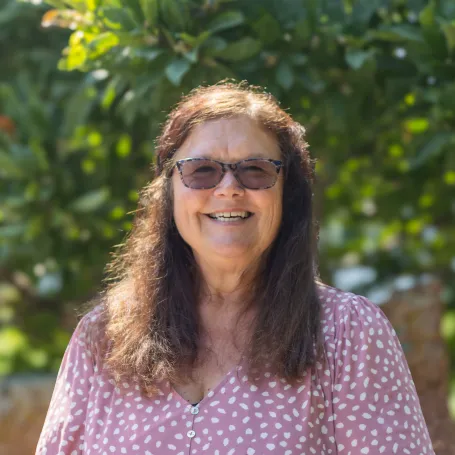
LuAnn Cummings knows the transformative power of a simple snack.
Cummings, who serves on the Idaho Education Association Board of Directors and is a member of the Coeur d’Alene Education Association, has been a special education teacher for 23 years. She has worked with students who have sensory needs and can’t handle the bright lights, odors and crowds in the school cafeteria. Sometimes, her students’ blood sugar runs low, leading to behavior issues. And some students are hungry simply because there’s not enough food at home.
Like so many other educators throughout the country, Cummings would provide snacks out of her own pocket, stocking her classroom with granola bars and Cup Noodles. She was spending $200 a month just for her own students at Lake City High School.
Finally, her husband put his foot down. “’We’re getting ready to retire in a few years,’” she remembered him saying to her. Cummings knew he was right, but it was difficult to turn students away.
“I noticed that in my rooms, I had a lot of kids coming in,” she said. “And when I said I didn’t have any food, it was heartbreaking. My behaviors went up, and I just had unhappy kids.”
So she did what caring educators throughout the state have done to meet funding gaps: She went to her community.
‘I Need You to Help Me Feed Kids’
Once school was out for the summer, Cummings went to work. She researched community groups whose missions centered on helping children and asked for time on board agendas. Armed with a stack of receipts, she made her pitch: “I need you to help me feed kids.”
Cummings didn’t just ask for snacks for her classes — she covered the whole building. Lake City’s special education department has 10 teachers sharing eight classrooms and more than 200 students.
“Please pretend there’s 10 teachers standing here with me,” she would say to board members. “Because that’s how many special ed teachers we have in this building.”
Not every door opened. But the Coeur d’Alene chapter of the Eagles donated $1,500, and the Hayden Eagles gave her $1,000. A Hayden Eagles member who served on the Windermere Foundation board handed her an application, and that foundation gave $1,000 more.
Cummings is still pitching and tracking down opportunities to reach her $5,000 goal. But the money she has already collected is making a difference.
What the Money Does
Cummings brought the checks to her school’s treasurer, who deposited them into the special education account. Part of the money went toward a locked cabinet so snacks don’t walk out of the classroom.
“SPED teachers just come into my room and grab a case of water and granola bars, or Cup Noodles, or mints or gum or fruit juice or whatever they would like, and take it back to their classroom,” she said. “I have kids coming in all day, every day, getting food and water and cheese.”
The biggest change is that Cummings is no longer forced to ration. “Now, I don’t even monitor how many they’re taking because I have enough to last us,” she said.
Science backs up the need for snacks. Students who are hungry don’t perform as well on tests. Children with attention deficit disorder often can’t recognize their own hunger until it is extreme and they cannot concentrate.
Some of her students do not qualify for free or reduced lunch, some don’t like what is being served, and some arrive late to school after a hard morning or because they are experiencing homelessness.
Providing snacks allows educators to “care for the whole child,” Cummings said.
Educators Regularly Must Ask for Outside Help
Richard Jurvelin, the chair of the Windermere Foundation, said this wasn’t the first contribution made to public school students in the Coeur d’Alene area recently. The foundation also provides money for backpacks filled with food so children don’t go hungry over the weekend and gives funds for the purchase of boots and socks.
“The teachers become the points of contact on whatever they’re asking for,” he said.
That’s not at all unusual. According to Adopt a Classroom’s 2025 teacher spending survey, every year educators spend an average of $895 from their own bank accounts on school supplies. That’s up 4% since 2015 — even though, on average, educators are earning 5% less than they did 10 years ago when adjusted for inflation.
As Cummings pointed out, Idaho consistently ranks at the bottom of per-pupil spending nationwide and has chronically underfunded education. With the ever-increasing price of gas and groceries, she said, families have little room to send snacks on their own.
The need is especially prevalent among SPED students. Idaho has struggled to make up the difference between what the federal government provides per SPED student and what the state provides, leaving many districts — and educators — scrambling to fill the gap on their own. Last year, lawmakers agreed to Superintendent of Public Instruction Debbie Critchfield’s request and cobbled together $5 million in funding for a high-needs SPED fund. But funding will most likely be a topic during the 2027 legislative session.
“It takes a community to raise a child,” she said. “And we need schools, we need community partners, we need mental health care.”
Her Advice to Colleagues
Anyone can fundraise if they know where to look, Cummings said: Find the community clubs in your area (like Kiwanis and Eagles), read their mission statements, get on their agendas, and make the ask. If they can’t help, ask them to use their networks to point you in the right direction. For example, one Hayden Eagles member told Cummings about a Coeur d’Alene grocery store that might be able to donate food nearing its sell-by date.
Jurvelin recommended reaching out to Windermere real estate agents in your area to learn more about how their local Windermere Foundation branch can help.
“You never know what your audience has that could help you,” she said. “The support is out there. We just have to go find it and ask the right people.”
Cummings said her whole department shares the motivation to help students feel their best and make the most of their time in school. “Every special educator in this building cares,” she said. Her whole department signed thank-you cards to donors.