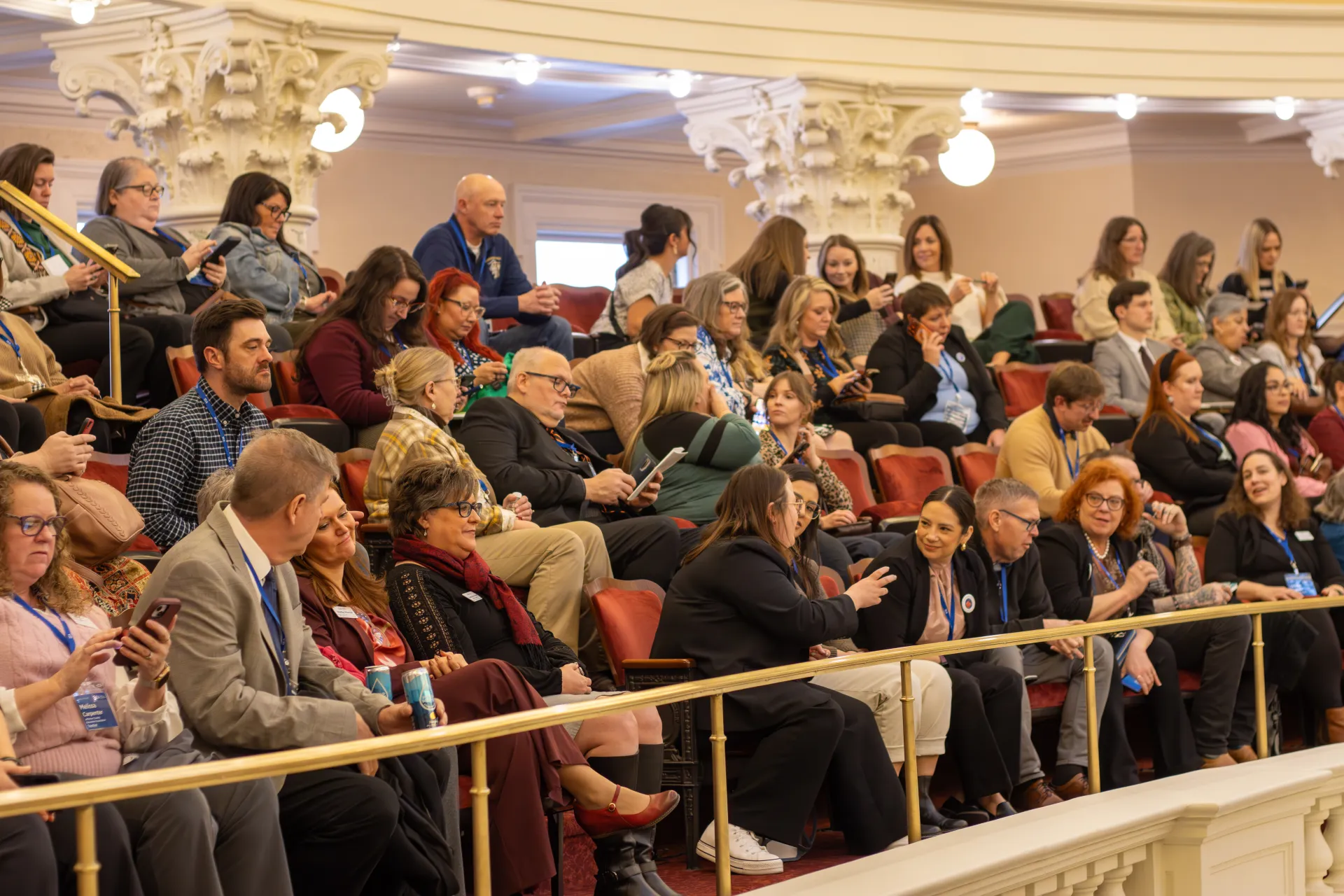
The big idea: Idaho Education Association’s Lobby Day is one of the most powerful tools the union has to shape lawmakers’ opinions. But for some members, Lobby Day is just one part of a continuous conversation with the elected officials. Here’s how they pull it off.
Play the long game: Lisa Callaway, co-president of the West Ada Education Association, has been able to engage lawmakers by viewing her lobbying efforts as a long-term relationship. A single conversation can make an impression, but a solid relationship can effect change. “You’re not going to take someone on a first date and propose to them on your first date, right?” Callaway said. She reaches out to lawmakers throughout the year, not just during the legislative session.
Meet with intention: Be realistic about what you can achieve in a meeting, Callaway said, and have clear goals. Before meeting with a legislator, Callaway asks herself: What do I want for myself from this conversation? What do I want for the legislator? And what do I want for the relationship? “You can’t show up and start making demands,” Callaway said — same as any other relationship.
Lead with what’s working: “It never hurts to lead with the positive,” Callaway said. Everyone, including lawmakers, needs to hear what they’re doing well. A litany of complaints can make a lawmaker shut down and turn defensive; educators shouldn’t avoid hard truths, Callaway said, but how they are presented matters.
Use gratitude as reinforcement and accountability: Positive reinforcement can make a huge difference in a relationship with a lawmaker, Callaway said. Not only does it build rapport, but it also sets an expectation. “It reminds them that we are paying attention to how they are voting,” she said.
Open your classroom: Ximena Schneider of the Idaho Falls Education Association built a relationship with Sen. Kevin Cook (R-Idaho Falls), one of the Idaho Legislature’s most reliable public education advocates, over many years. Their relationship started with an invitation to see Schneider’s students in action. “I said, ‘Come volunteer in my classroom, and you’ll see that one stop is not enough.’” Cook wound up volunteering regularly in Schneider’s classroom, including an unbroken five-year streak of Fridays.
Be real: Schneider said she did nothing to sugarcoat the realities of her 8th grade classroom when Cook visited for the first time. When a student used an expletive while asking what book the class would be reading that day, Schneider flipped the disruption into a teachable moment for Cook: Schneider could help her students improve their reading skills, but the students were coming in with their own issues. “The key is to make sure that these leaders are in the classroom, that they are in contact with teachers as professionals, and to build those friendships,” she said. “They need to understand we’re not just whining.”
Be assertive. Once a real relationship has been established, it becomes easier — and even more effective — to be candid, Schneider said. “I am not afraid to speak to them and say, ‘You’re wrong,’” she said.
Engage future leaders early. Schneider recommends talking to lawmakers, but also to precinct committee leadership. Many people who are interested in politics use that local political party position as a stepping stone to service in the Legislature, she said, and it’s an efficient way to build trust at the grassroots level.
Use stories to humanize policy. Sharing hard data is great, Schneider said, but it has limits. Engage lawmakers on a human level by telling real-world stories from the classroom, which are more memorable and meaningful than any number could be. “Stories take you where data cannot,” Schneider said.
Start small and stay consistent. You don’t need to come up with a grand strategic plan to reach out to your local lawmaker, Callaway said. “Just do one thing,” she said: Thank a lawmaker for a vote. Invite a decisionmaker into your classroom. Reach out and ask your representative or senator to attend a class presentation or, like Schneider did, invite them to volunteer. The most important thing is to do it, Callaway said. “Just take it one step at a time.”